Editor’s Note: Authored by the Oper Hand Insights Desk under the direction of _Steve Ross. Every insight is verified against Steve’s 30-year ‘Oper Hand Lens’, acquired in the trenches of B2B startups and scaleups. Content is cross-referenced with sources such as The Wall Street Journal, Forbes, Harvard Business Review, Entrepreneur, and others.
You are likely stuck in the founder over functioning trap. It shows up when pressure rises, traction flickers, and you feel the pull to step back into everything. This piece explains why that instinct appears at the worst possible moment and what strong operators do instead.
TL;DR
- Over functioning is not commitment. It is a control reflex.
- The worst moment to absorb work is when complexity first spikes.
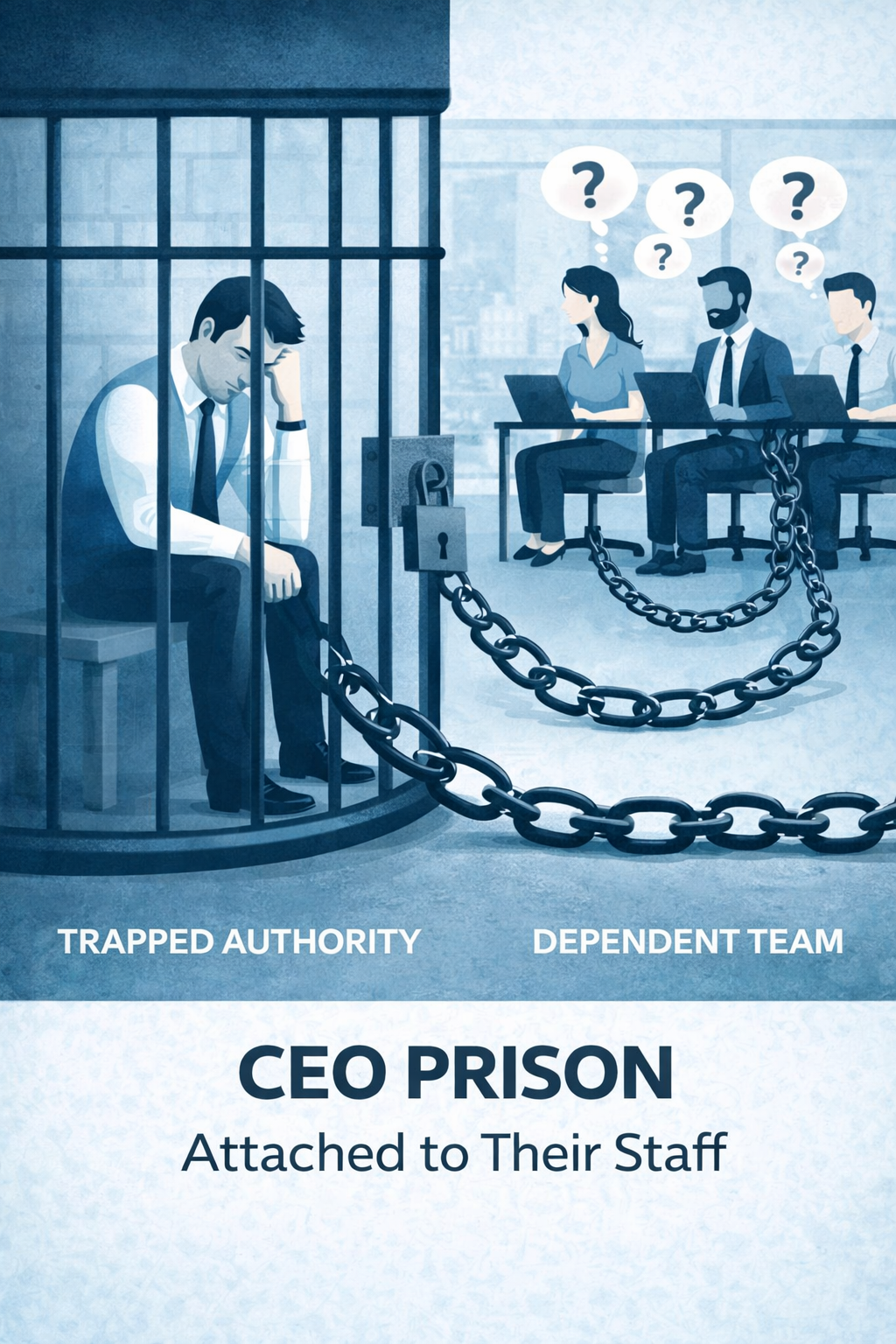
- Startup teams stall when authority stays trapped at the top.
- The founder over functioning trap collapses leverage right when the company needs it most.
- Strong founders redesign the decision flow rather than rescuing execution.
You Did Not Lose Control Overnight
You can feel it before you can name it. Your calendar fills. Your inbox becomes the decision queue. Slack messages wait longer than they should. People start asking you things they used to handle themselves. You tell yourself it is temporary. You tell yourself the team needs support. You tell yourself you will step back once things stabilize.
They never do.
This is where many startup founders misread the signal. The pressure is real. The urgency is real. The instinct to step in feels responsible. But the behavior creates a hidden reversal. Instead of building capacity, you drain it. Instead of accelerating execution, you slow it down.
That reversal is the founder over functioning trap.
Why This Happens Exactly When It Hurts Most
Early traction creates a specific kind of stress. Volume increases before structure exists. Decisions multiply faster than clarity. The business starts asking harder questions than it did last quarter. What once felt simple now carries consequence.
At this stage, the company still looks to you for answers. You built it. You know the context. You have solved these problems before. Stepping in works. At first.
The problem is timing. This moment demands leverage, not effort. Yet pressure narrows your time horizon. You optimize for relief instead of capacity. You choose certainty over scale. You move faster alone than waiting for someone else to decide.
This is why the founder over functioning trap activates under stress. It is not incompetence. It is fear paired with responsibility.
Over functioning Is Not a Work Ethic Issue
Many founders frame this as workload. They say they are doing too much. They talk about burnout. They promise to delegate more. None of that addresses the real pattern.
Over functioning is a leadership behavior. It shows up when you reclaim decisions, rework outputs, or quietly take ownership back without saying so. You may believe you are helping. The team reads something else entirely.
They read that decisions still belong to you.
Once that signal lands, behavior changes. People slow down. They wait. They check first. Initiative drops. Accountability blurs. Not because the team lacks talent, but because authority is unclear.
This is the compounding cost of the founder over functioning trap. It trains dependency while you think you are being helpful.
The Cost You Do Not See on the Dashboard
Most founders only measure what is visible. Output. Speed. Revenue. What they miss is decision velocity. How quickly a capable person can decide and act without escalation.
When you over function, decision velocity collapses. Everything routes through you. The business looks busy but stops compounding. Meetings multiply. Execution stretches. You feel indispensable, which is the most dangerous signal of all.
This pattern is not anecdotal. It is structural. According to Embroker, 82% of startups fail due to leadership or management issues. That failure rarely starts with bad ideas or weak markets. It starts when decision authority never leaves the founder’s hands.
That is the founder overfunctioning trap doing its work.
Why Delegation Fails at the Startup Stage
Founders often respond by delegating tasks. They assign work. They hand off projects. They ask for updates. Nothing changes.
That is because delegation without authority is theater. You may transfer activity, but you retain the decision. The team senses this immediately. They comply, then wait. You end up reviewing everything anyway.
Real leverage comes from decision rights. Who decides. With what inputs? At what threshold does escalation occur? If that is not explicit, the founder remains the default.
This is where many startups stall, not from lack of effort, but from unresolved control.
What Strong Operators Do Under Pressure
Strong operators do something that feels uncomfortable. They resist the urge to rescue execution. They slow themselves down long enough to redesign how decisions move. They accept short-term discomfort in exchange for long-term leverage.
They ask harder questions. What decisions am I still holding that others could own? Where am I the bottleneck by habit, not necessity? What would break if I stepped out of this decision entirely?
They do not disappear. They reposition. They choose leverage over relief.
This is how they avoid the founder over functioning trap when the stakes rise.
Breaking the Pattern Requires a System
Escaping this pattern does not come from willpower. It comes from structure.
Use a simple decision flow framework. Every recurring decision gets three answers. Who owns it. What inputs matter. When escalation is required. No ambiguity. No silent overrides.
This forces clarity. It also forces restraint. You will feel the urge to step in. That urge is the signal that the system is working.
At the startup stage, this discipline is what allows momentum to survive growth.
Founder Flywheel Alignment
The Founder Flywheel exists to break this exact constraint. It redesigns how the founder operates so the company no longer depends on personal intervention. It restructures decision flow, reduces key-person risk, and restores execution velocity.
This is not coaching. It is operating design.
Headquartered in Bellevue, WA, with an office in Boulder, CO, we install the revenue and operations systems that generate revenue, not burn it. If you’re ready to optimize your sales process and drive real growth, let’s talk.
The Real Judgment
Your team did not fail you. They responded rationally to the system you created. The question is not whether you work hard enough. It is whether you are willing to let go of the role that made you successful in order to build one that scales.
The founder over functioning trap feels like responsibility. In reality, it is the moment you decide whether the company grows past you or stays dependent on you.
Ask yourself honestly. Are you protecting the business, or protecting your identity inside it?