
Hiring & People Decisions
- How Companies Break
- Hiring & People Decisions

Why Adding Headcount Before Fixing Structure Makes It Worse
This failure mode explains how companies break when hiring is used to absorb ambiguity rather than to fix ownership, causing complexity to compound and throughput to stall.
Most bad hires are not talent mistakes. They are structural mistakes.
Early on, hiring feels like relief. The team is overloaded. Work is backing up. Decisions slow. Something feels broken, so a role gets created to absorb the pain. A smart person is brought in. The team feels lighter.
As the company grows, hiring becomes the default response to friction. Instead of redesigning ownership or decision flow, headcount increases. New roles are added before authority is defined. Responsibilities expand without clear control. People are asked to “own” outcomes they can’t change.
Teams adapt.
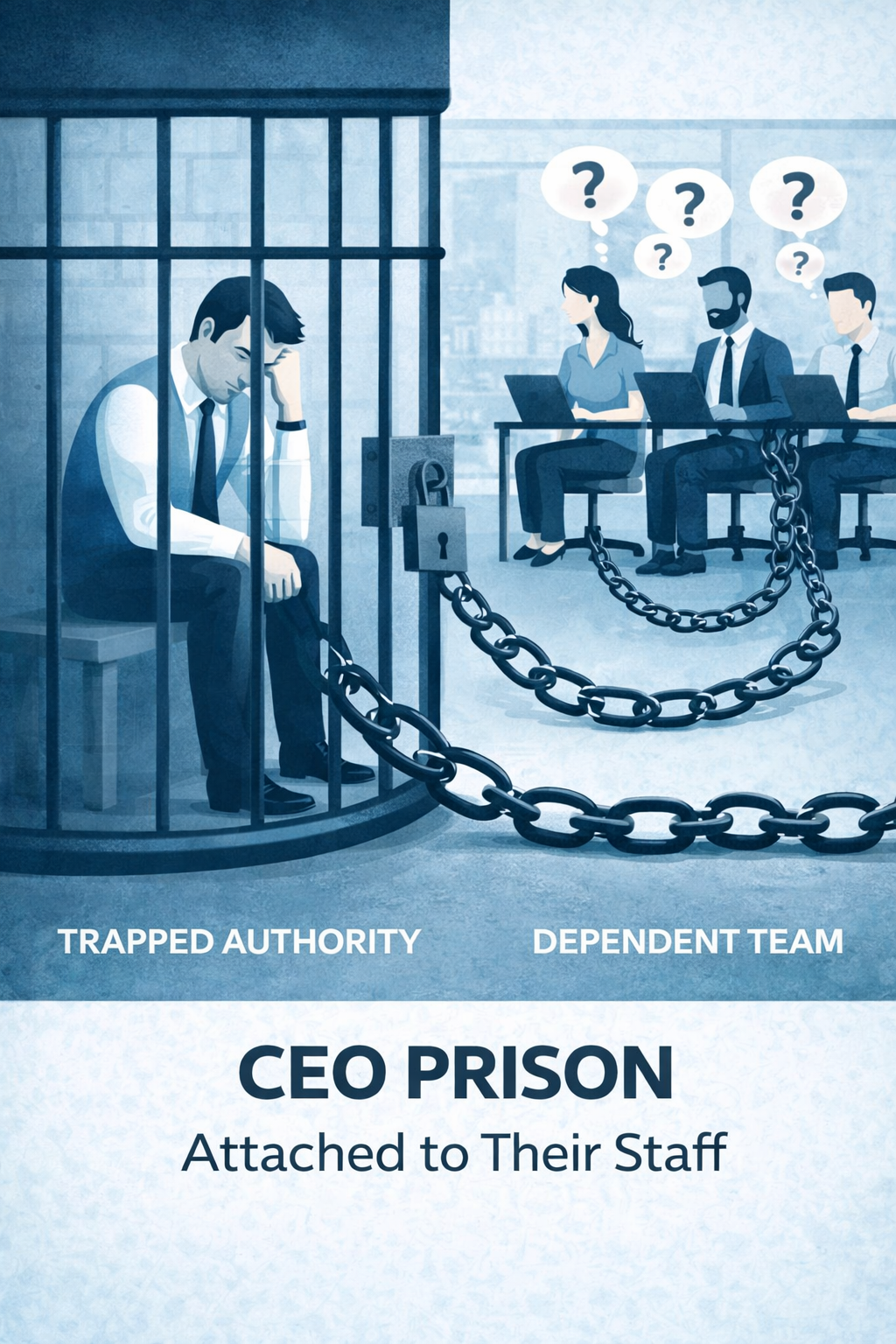
If authority is unclear, they escalate. If decisions still route back to the CEO, they wait. If priorities conflict, they hedge. Strong people spend time navigating ambiguity instead of producing results.
As more people are added, coordination replaces execution. Decisions slow further. Communication layers multiply. Payroll grows faster than output. The founder is still involved everywhere, now managing people instead of problems.
What Actually Breaks
Hiring doesn’t break because candidates aren’t good enough.
It breaks because roles are added before ownership and authority are defined.
Hiring does not create ownership.
Decision rights do.
When people are hired into unclear structures, accountability blurs. Work fragments. Decisions loop. Throughput stalls. Strong hires underperform, not because they lack skill, but because the system gives them responsibility without control.
This is not a recruiting problem.
It is a sequencing problem.
Hiring pressure usually follows unclear ownership and authority, not a lack of talent. Leadership & Team Management
Why This Happens
When hiring substitutes for leadership decisions, inefficiency gets locked in.
Instead of fixing decision flow, companies add people to manage around it. Instead of clarifying ownership, they add layers. Instead of simplifying work, they absorb complexity with headcount. Every hire makes the system heavier and harder to unwind.
That compounding cost is operational debt.
Once roles, titles, and reporting lines are in place, changing them becomes politically and emotionally expensive. The organization optimizes around the wrong structure.
What This Looks Like At Scale
Hiring is about increasing throughput.
Effective hiring happens after ownership is clear. Authority is explicit. Decisions are distributed. The role exists to multiply output, not absorb confusion. When structure is right, the right hire creates leverage quickly.
When structure is wrong, no hire fixes it.
Why This Section Exists
Hiring feels like progress. At scale, it often hides real problems.
This section exists because companies break when headcount grows faster than clarity around ownership, authority, and throughput.
It explains:
- When hiring is the right move, and when redesigning ownership and authority is the real fix.
- Why does hiring too early compound operational debt rather than relieve it?
- How mis-sequenced hires lock inefficiency into the system.
- Why adding people rarely fixes execution problems on its own.
- How to use hiring to increase throughput instead of complexity.
The goal is not a bigger team. The goal is a system that lets people make more decisions, not fewer.
Oper Hand intervenes at this failure mode by redesigning how role and hiring decisions, ownership, and execution are structured.
Recommended Reading Order
Your Team Didn’t Fail You