Leads & Pipeline
- How Companies Break
- Leads & Pipeline
This failure mode explains how companies break when pipeline rigor erodes, causing forecasts to drift, leakage to hide, and revenue signals to lose credibility.
Most startups don’t miss revenue because deals fall apart at the end.
They miss it because they never had control of the funnel to begin with.
At the start, the problem looks like lead volume. Qualified demand is thin. Inbound is inconsistent. Outbound is weak. Lead quality is uneven. That pain is real, and for many companies it is the first constraint.
But as the company grows, the real issue shifts.
Pipeline reliability depends on who owns demand, qualification, and follow-through, which is set long before deals ever enter the funnel. Hiring & People Decisions
Deals enter the funnel without discipline. Qualification is soft. Movement feels busy but unmanaged. Leakage exists everywhere, but no one can point to where or why. Forecasts start to drift. Revenue gets overpromised anyway. Leadership micromanages because the system can’t be trusted.
When the funnel isn’t managed with rigor, the pipeline becomes a story. Activity replaces truth. Deals linger. Bad opportunities clog the system. The gap between forecast and reality widens every quarter.
If you want to see what those pipeline assumptions actually do to revenue, cost, and profit together, model them using the Profit & Loss Planner
That compounding cost shows up long before a miss hits the board deck.
What Actually Breaks
The sales process breaks because rigor is optional.
If exit criteria exist, they aren’t enforced. Deals advance because someone feels good. Stalled deals stay alive. Weak deals never get killed. No one owns leakage end-to-end. Forecasts reflect hope, not reality.
More leads don’t fix this.
Pipeline rigor is the discipline of deciding what enters, what moves, and what dies.
Without rigor, pipeline is belief. With rigor, it becomes a control system.
What This Looks Like At Scale
The sales system requires two things at once.
First, a real demand engine at the top of the funnel. Inbound and outbound are intentional, repeatable, and measurable. You know how to generate leads and why they convert.
Second, a managed system through the funnel. Deals move only when criteria are met. Leakage is visible and reviewed. Forecasts mean something. Leadership involvement decreases because visibility increases.
This is the shift from chasing deals to running a revenue system.
Why This Section Exists
Sales pipeline doesn’t break at the end of the quarter. It breaks much earlier, when rigor quietly disappears.
This section exists because revenue becomes unpredictable when demand, qualification, and follow-through are no longer actively owned end-to-end.
It explains:
- Why qualified demand breaks down at the top of the funnel as companies grow.
- How full-funnel rigor erodes, and activity replaces control.
- Why leakage stays invisible without deliberate management.
- How forecasting slowly turns into fiction.
- Why leaders stay in deals longer than they should to compensate for a system they can’t trust.
The goal is not more deals. The goal is a pipeline that leadership does not have to rescue.
Oper Hand intervenes at this failure mode by redesigning how demand and qualification decisions, ownership, and execution are structured.
Recommended Reading Order
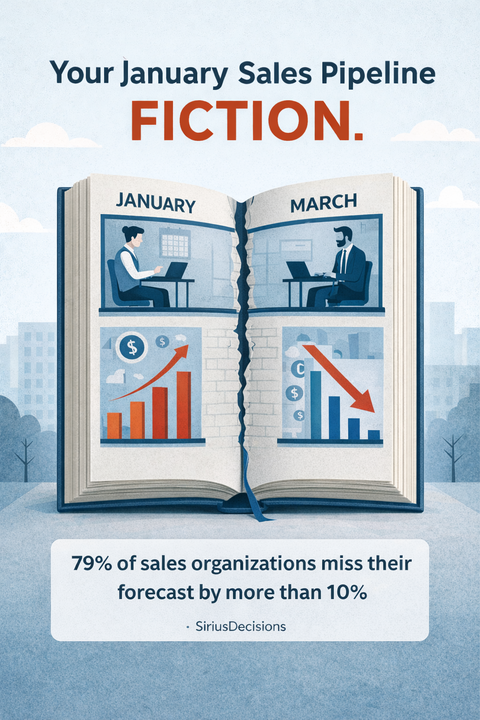
Your January Pipeline Is Fiction
7 Must-Know Tips to Eliminate Sales Pipeline Leaks