
The Bottomline
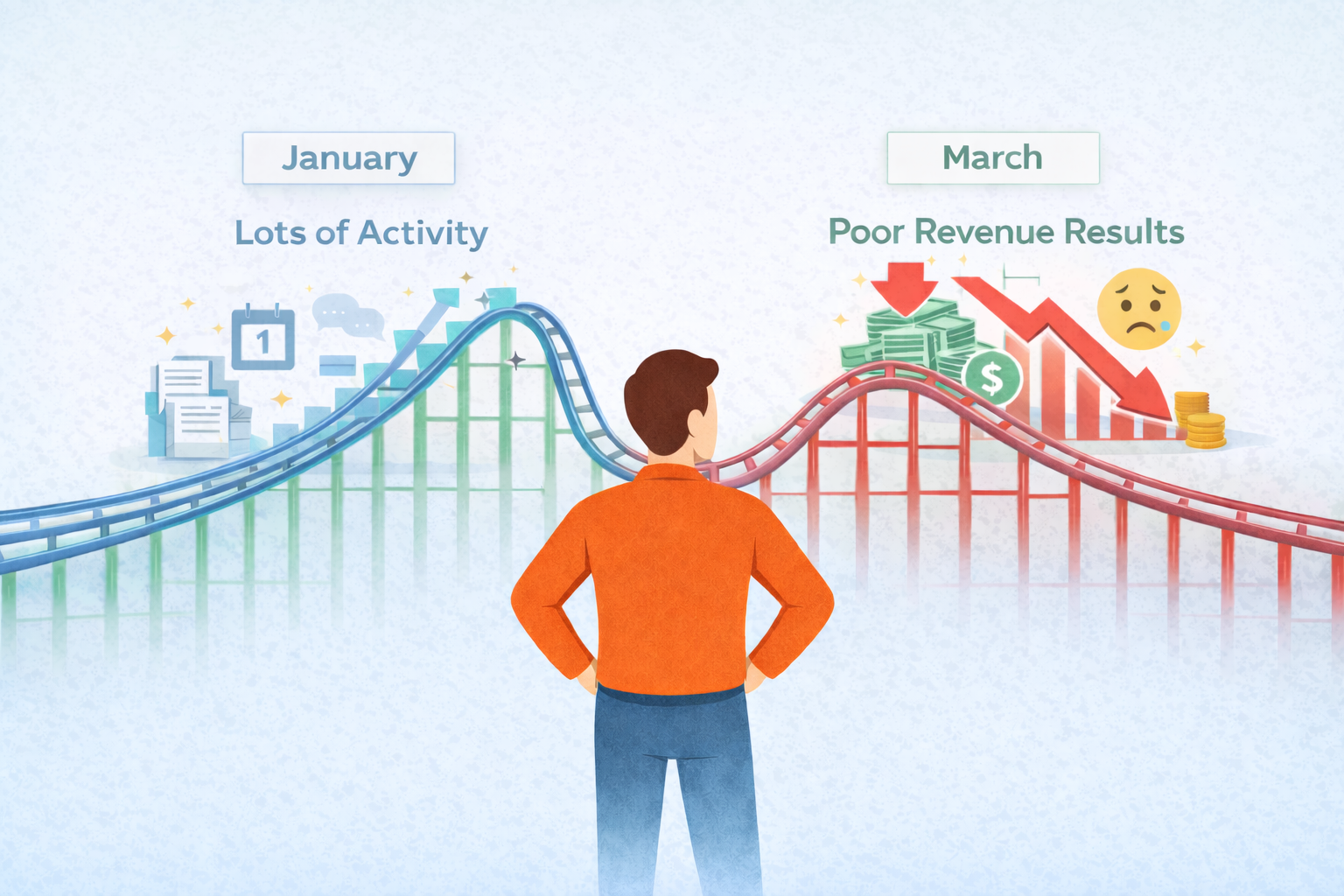
Most startups lose their year in January by mistaking “getting busy” for “getting results.” Q1 isn’t for hitting the gas; it’s for finding out where your business is leaking and tightening what was missed last year. Most founders don’t realize startup strategy breaks when you scale not because the vision is wrong, but because execution outpaces validation. If you spend this quarter fixing your cash position and removing the one thing slowing down your team, the rest of the year will compound. If you spend it on “brand polish” or hiring ahead of revenue, you are just performing leadership theater instead of operating a company.
TL;DR
- Q1 is not for acceleration. It is for exposing what is real.
- Most startups fail Q1 by optimizing noise instead of removing drag.
- What matters now is cash truth, real demand signals, and decision speed.
- What does not matter now is polish, hiring, or rebuilding what is not yet proven.
- Your Q1 priorities reveal whether you are operating the company or performing leadership.
January always feels clean.
New plans. Fresh decks. Aggressive goals that feel reasonable because the calendar reset did the emotional work for you. But Q1 is not a fresh start. It is a stress test. It reveals whether last year taught you anything or whether you are about to repeat the same mistakes with better slide formatting.
For early-stage companies, Q1 does not reward ambition. It rewards honesty. It punishes founders who confuse motion with progress and clarity with confidence.
If you get Q1 wrong, the rest of the year becomes damage control dressed up as growth.
Why this matters now
Smart growth for startups is about sequencing, not speed. Q1 sets the operating posture for the year. The habits you lock in now determine whether you spend the next nine months reacting or compounding.
Most founders treat Q1 like a launch ramp. Strong operators treat it like an audit.
This is the quarter where weak assumptions surface, where cash reality collides with narrative, and where leadership discipline either tightens or collapses. The earlier the company, the more brutal and useful Q1 becomes.
The illusion of progress in early-stage companies
Early-stage startups are excellent at creating the feeling of progress.
New tools. New hires. New positioning. New roadmaps. None of these are inherently wrong. They are just rarely the constraint.
Activity spikes in Q1 because planning feels productive. Meetings multiply. Documents grow. Decisions slow. The company gets busier while output stays flat.
This is not momentum. It is avoidance.
When founders feel pressure, they often reach for complexity. Complexity gives the illusion of sophistication. It also hides the fact that the core system is still fragile.
Smart growth for startups requires the opposite instinct. It requires subtraction.
What actually matters in Q1
Q1 has a short list. If your priorities are longer than this, you are already leaking focus.
Cash clarity and burn truth.
You need an unfiltered view of cash. Not a hopeful forecast. Not a best-case plan. Actual burn, actual runway, and actual commitments.
One reason this matters is capital efficiency, not optics. According to Phoenix Strategy Group, “A Burn Multiple below 1.5x is considered excellent, indicating significant revenue growth relative to cash usage. A Burn Multiple above 2.0x raises concerns about unsustainable growth and poor capital allocation.” That benchmark exposes why Q1 financial clarity matters more than Q1 storytelling.
If you cannot state your real burn and runway without checking a spreadsheet, you are operating on vibes.
Revenue motion that proves demand.
Effort does not matter. Activity does not matter. What matters is whether someone outside the company is willing to pay, renew, or expand.
In Q1, you are not scaling revenue. You are validating that revenue exists at all. One repeatable path to revenue beats five experimental channels that look good in reports.
If revenue still depends on founder heroics, that is not a failure. That is information. Treat it that way.
Decision velocity and ownership clarity.
Q1 exposes whether decisions move or stall. If everything routes through you, speed collapses. If no one owns outcomes, execution drifts.
You do not need more alignment. You need fewer decisions and clearer owners.
One operational choke point.
Every startup has one thing that slows everything else. Lead handoff. Onboarding. Billing. Support. Product delivery.
Pick one. Fix it.
Smart growth for startups comes from removing drag, not adding fuel.
What does not matter in Q1
This is where most founders get defensive. That reaction is the signal.
Hiring ahead of proof.
Hiring does not fix unclear demand or broken systems. It amplifies them.
Tools, replatforming, and rebuilds.
New software feels like action. Most of it is procrastination.
Brand polish and premature positioning.
You do not need a rebrand. You need customers who stay.
Meetings without consequence.
Alignment meetings without ownership are expensive rituals.
Q1 Strategic Priority Matrix
| What to Prioritize (High Impact) | What to Ignore (Low Impact) |
|---|---|
| Cash Truth: Real-time burn and runway clarity. | Premature Hiring: Adding headcount before proof. |
| Demand Signals: Validated revenue over activity. | Brand Polish: Rebranding or aesthetic updates. |
| Decision Velocity: Eliminating bottlenecks. | System Rebuilds: Tools that mask procrastination. |
| Friction Removal: Fixing one core operational drag. | Ritual Meetings: Alignment without ownership. |
The real job of a startup CEO in Q1
Your job in Q1 is not inspiration. It is reduction.
Reduce uncertainty. Reduce noise. Reduce the surface area of failure.
Smart growth for startups requires restraint. That restraint feels uncomfortable because it removes options.
Q1 is where leadership maturity shows up quietly. Not in speeches. In what you say no to.
Efficiency creates leverage before scale
Efficiency is not cost-cutting. It is throughput.
An efficient startup moves faster with the same inputs. It shortens cycles. It clarifies ownership. It removes waiting.
This is why Efficiency Enhancer work matters early. Removing operational drag creates room to think, sell, and decide without adding headcount.
Founders often chase growth to escape inefficiency. Strong operators fix inefficiency so growth does not break the company later.
Headquartered in Bellevue, WA, with an office in Boulder, CO, we install the revenue and operations systems that generate revenue, not burn it. If you’re ready to optimize your sales process and drive real growth, let’s talk.
Q1 is a mirror
Q1 does not care about your story. It reflects your discipline.
If you focus on the wrong things now, the rest of the year will punish you quietly. If you focus on the right things, the year compounds without drama.
Smart growth for startups starts with honesty. Q1 is where that honesty either shows up or disappears behind motion.
You do not need a bigger plan. You need a sharper one.