
Talent Strategy

Talent strategy is the proactive alignment of a company’s workforce with its long-term business goals. For firms scaling from 10 to 200 employees, it shifts focus from reactive hiring to the intentional development of high-performance cultures, succession planning, and the acquisition of ‘force-multiplier’ roles that accelerate the achievement of strategic milestones.

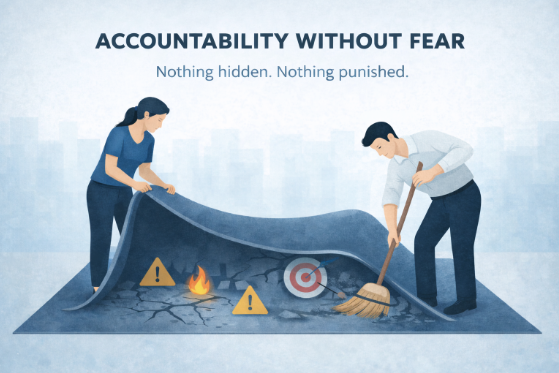
Illustration of two team members lifting and cleaning beneath a rug to reveal hidden cracks, warning signs, and issues, symbolizing transparent problem-solving and Accountability without fear through open visibility, shared ownership, and trust in the workplace.

Accountability Is Making Them Hide

Editor’s Note: Authored by the Oper Hand Insights Desk under the direction of Steve Ross. Every insight is verified against Steve’s 30-year ‘Oper Hand Lens’, acquired in the trenches of B2B startups and scaleups. Content is cross-referenced with sources such as The Wall Street Journal, Forbes, Harvard Business Review, Entrepreneur, and others. At scale, accountability stops being a cultural

Accountability Is Making Them Hide Read More »

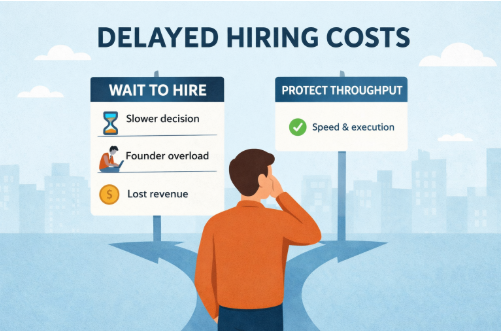
Illustration showing a founder standing at a crossroads comparing “Wait to Hire” versus “Protect Throughput,” highlighting delayed hiring costs such as slower decisions, founder overload, and lost revenue versus speed and execution from timely hiring.

You Are Paying for Hesitation

Editor’s Note: Authored by the Oper Hand Insights Desk under the direction of _Steve Ross. Every insight is verified against Steve’s 30-year ‘Oper Hand Lens’, acquired in the trenches of B2B startups and scaleups. Content is cross-referenced with sources such as The Wall Street Journal, Forbes, Harvard Business Review, Entrepreneur, and others. Delayed hiring costs compound faster than most founders

You Are Paying for Hesitation Read More »

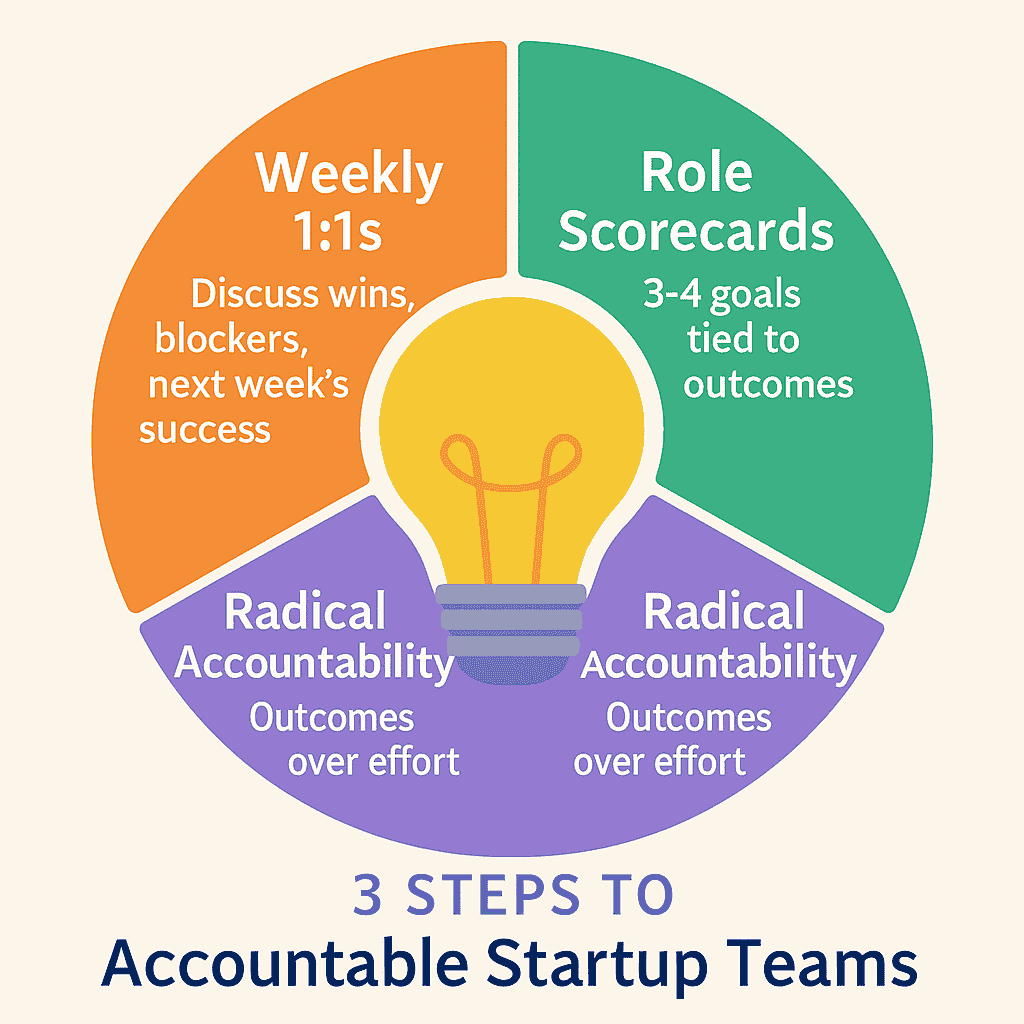
Circular infographic illustrating the 3-step playbook for startup team accountability. At the center is a lightbulb icon, symbolizing ideas and innovation. The header reads “3 STEPS TO Hold Your Startup Team Accountable

Best Way to Hold Your Startup Team Accountable

TL;DR – The Best Way to Hold Your Startup Team Accountable Most startups struggle with accountability because they avoid hard conversations or overcomplicate the process. The best way to hold your startup team accountable is a simple 3-step system: Weekly 1:1s (30 min): Wins, blockers, next week’s success. Role Scorecards: 3-4 big, measurable goals tied

Best Way to Hold Your Startup Team Accountable Read More »

Flat illustration of a founder standing at a fork in the road, holding a hiring form and checklist, choosing between a large overlapping team and a smaller high-performing team. Visual metaphor for startup hiring mistakes.

Startup Hiring Mistakes: Why Headcount Is No Longer a Flex

TL;DR – Avoid These Startup Hiring Mistakes Most startup hiring mistakes happen when founders hire before the team hits full capacity.  Adding headcount too soon leads to role confusion, duplicate work, and slower execution.  Always validate current workload and team bandwidth before hiring.  Clearly define the role, responsibilities, and outcomes for any new hire.  Ask

Startup Hiring Mistakes: Why Headcount Is No Longer a Flex Read More »

A leader and an employee in a one-on-one conversation, focusing on solutions, exemplifying accountability without fear in leadership.

6 Bold Ways to Build Accountability Without Fear

Accountability often has a bad reputation. When handled poorly, it leads to finger-pointing, distrust, and diminished morale. But accountability doesn’t have to be a source of anxiety. When reimagined, it can drive team performance, encourage innovation, and create a culture of ownership. Leaders must foster accountability without fear in leadership by building systems that prioritize

6 Bold Ways to Build Accountability Without Fear Read More »

Illustration of conflict resolution for effective leadership

Conflict Resolution for Effective Leadership

Conflict is inevitable in any organization. As a business leader, you’re familiar with the challenges it brings. What separates effective leaders isn’t the absence of conflict, but how they manage it without office drama. Handled poorly, conflict erodes trust, damages morale, and reduces productivity. But when managed well, it becomes an opportunity for growth, collaboration,

Conflict Resolution for Effective Leadership Read More »

Modern Leadership

Future-Ready: Modern Leadership Strategies

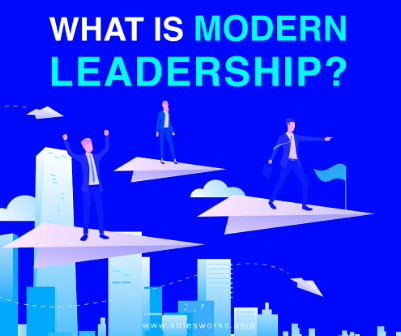
With rapid changes in technology, evolving employee expectations, and the rise of remote work, these shifts have created new challenges. If your leadership isn’t adapting, it could be the roadblock stopping your business from thriving. Here’s how to identify gaps in your leadership and implement modern leadership strategies for business growth. Why Traditional Leadership Doesn’t

Future-Ready: Modern Leadership Strategies Read More »

Scroll to Top
Call Us